

Avatar: The Last Airbender season 2 recap: Is Aang dead or alive after the Ba Sing Se battle?
Sinthya Banik | Jun 25, 2026, 19:43 IST
Netflix’s Avatar: The Last Airbender Season 2 delivers intense earthbending training, Toph’s debut, Zuko’s moral struggles and a devastating Ba Sing Se finale where Aang’s Avatar State battle leaves his fate uncertain.

Image credit : Netflix | Earth Kingdom trials, Toph’s debut and a devastating Ba Sing Se finale test Team Avatar’s bonds in Avatar: The Last Airbender Season 2
Netflix dropped Avatar: The Last Airbender Season 2 on June 25, 2026, delivering a more serialized and emotionally layered chapter in the live-action adaptation. Helmed by creators Michael Dante DiMartino and Bryan Konietzko, with key input from showrunners Jabbar Raisani and Christine Boylan, the season consists of seven episodes with notably longer runtimes, often exceeding an hour to accommodate deeper political intrigue, character introspection, and high-stakes bending sequences. This structure marks a deliberate evolution from Season 1’s format, prioritising convergence of storylines over standalone adventures.
![]()
Returning cast members Gordon Cormier (Aang), Kiawentiio (Katara), and Ian Ousley (Sokka) are joined by Dallas Liu as the tormented Prince Zuko, Elizabeth Yu as the prodigious and dangerous Princess Azula, Paul Sun-Hyung Lee as the wise Uncle Iroh, and Daniel Dae Kim as the imposing Fire Lord Ozai. Miya Cech steps into the role of Toph Beifong, bringing the fan-favourite earthbending master to vivid life with a performance that captures both defiance and hidden vulnerability. Justin Chien appears as Earth King Kuei, and Chin Han as the scheming Long Feng.
Picking up after the defence of the Northern Water Tribe, the season follows Aang’s urgent need to master earthbending ahead of Sozin’s Comet. The narrative interweaves three primary threads- Team Avatar’s quest for allies and training amid Earth Kingdom turmoil; Zuko and Iroh’s precarious existence as fugitives; and the Fire Nation’s insidious campaign that peaks with the fall of Ba Sing Se. Themes of trust, mercy, legacy, and the personal cost of war run throughout, grounded in sharp writing and committed performances.

Returning cast members Gordon Cormier (Aang), Kiawentiio (Katara), and Ian Ousley (Sokka) are joined by Dallas Liu as the tormented Prince Zuko, Elizabeth Yu as the prodigious and dangerous Princess Azula, Paul Sun-Hyung Lee as the wise Uncle Iroh, and Daniel Dae Kim as the imposing Fire Lord Ozai. Miya Cech steps into the role of Toph Beifong, bringing the fan-favourite earthbending master to vivid life with a performance that captures both defiance and hidden vulnerability. Justin Chien appears as Earth King Kuei, and Chin Han as the scheming Long Feng.
Picking up after the defence of the Northern Water Tribe, the season follows Aang’s urgent need to master earthbending ahead of Sozin’s Comet. The narrative interweaves three primary threads- Team Avatar’s quest for allies and training amid Earth Kingdom turmoil; Zuko and Iroh’s precarious existence as fugitives; and the Fire Nation’s insidious campaign that peaks with the fall of Ba Sing Se. Themes of trust, mercy, legacy, and the personal cost of war run throughout, grounded in sharp writing and committed performances.
View this post on Instagram
Grounding the Avatar: Aang’s earthbending trials, Toph’s introduction and team dynamics
Subsequent episodes expand on training hurdles. Earthbending requires Aang to embrace stability and direct confrontation rather than evasion. Visions during travels, reminiscent of swamp encounters- foreshadow allies and challenges, emphasising interconnectedness. These sequences allow for character bonding: Sokka’s strategic mind shines in planning, Katara offers emotional support, and Appa’s presence provides comforting normalcy amid chaos.
Toph Beifong’s arrival is a standout development. Introduced through underground fighting circuits, she demonstrates unparalleled earthbending skill despite her blindness, “seeing” through vibrations in the ground. Her wealthy family’s overprotectiveness creates conflict; Toph rebels, proving her strength dramatically.
The invention of metalbending which is bending the impurities within metal- occurs during an escape from a reinforced cage imposed by her mother. This not only frees her but marks a major innovation in bending arts, symbolising breaking limitations.
Training montages with Aang reveal Toph’s tough, no-nonsense style. She forces him to confront his avoidance tendencies, teaching that true earthbenders wait, listen, and strike with unyielding force. These interactions inject humour and heart, strengthening the found family dynamic. By mid-season, Toph’s integration makes Team Avatar feel more complete and capable, even as external threats mount. The arc underscores personal growth: Aang learns humility and resilience, while Toph discovers the value of chosen connections over isolation.
Flames of conflict: Zuko’s internal war, Iroh’s guidance and Azula’s manipulations
Azula’s presence looms large. Her tactical brilliance and lack of empathy make her a formidable antagonist. She assembles a capable team and orchestrates pursuits that keep Zuko and the Gaang off-balance. In Ba Sing Se, Zuko experiences a different life: modest living among refugees, defending the vulnerable, and forming genuine bonds. His apology to Katara for the suffering caused by the Fire Nation, and her offer to heal his scar, represent a potential turning point. A tentative romance with Jin adds tenderness and highlights his longing for normalcy.
Yet Azula exploits deep-seated wounds. Conversations about their mother reframed through her perspective trigger Zuko’s sense of loyalty and abandonment. In the climactic underground confrontation, he sides with Azula against Team Avatar. This betrayal stings because it follows credible progress toward change, illustrating how trauma can override growth. Iroh’s disappointment and imprisonment add poignancy, positioning him as a moral anchor whose influence lingers. Zuko’s arc avoids simplicity; it shows redemption as nonlinear, influenced by pain, family pressure and fleeting glimpses of a better path.
Intrigue in the Earth Kingdom capital: Conspiracy and the Siege of Ba Sing Se
Toph’s storyline intersects powerfully here. After conflict with the group, she returns home only to face manipulation. Her metalbending breakthrough during escape reaffirms her independence and cements her role. Iroh’s temporary alliance with Aang for rescues highlights strategic wisdom and cross-faction empathy. Meanwhile, Azula infiltrates, killing or coercing Dai Li leaders and orchestrating the city’s fall by lowering defences for Fire Nation troops.
These episodes masterfully blend espionage, action, and character beats. Political machinations feel authentic, reflecting how internal division invites conquest. Battles escalate from skirmishes to full chaos, with earth, water, and fire bending colliding in confined spaces. The buildup creates genuine dread, making Ba Sing Se’s fall a devastating yet inevitable payoff.
Avatar State reckoning: The finale battle explained
Aang, seeing his friends on the verge of defeat, taps into the Avatar State. Glowing blue, eyes and arrow illuminated, he channels past Avatars’ power in a display of raw dominance. The sequence showcases the live-action’s strengths- dynamic camera work, impressive VFX and Cormier’s physical performance conveying both power and inner conflict. He overwhelms Azula and guards- turning the tide decisively.
Yet Aang’s core trait which is compassion - prevails. Rather than delivering a killing blow, he hesitates. Azula exploits the opening, striking him critically while the Avatar State leaves him vulnerable. The risk is immense: lore establishes that death in this state could end the reincarnation cycle forever. Aang collapses. Team Avatar extracts him with Appa’s help as the city falls. Katara, using the special water once intended for Zuko, attempts healing, but the finale closes on Aang’s unresponsive form, creating one of the series’ most effective cliffhangers.
Aang is alive but gravely injured and unconscious at Season 2’s close. The healing shows no instant effect, heightening uncertainty. This is not a fake-out death but a deliberate narrative choice amplifying stakes. The Avatar State represents ultimate power fused with past lives, yet it demands perfect control; vulnerability during it threatens everything Aang protects. His mercy, while consistent with his character, carries realistic consequences in war, forcing viewers to question ideals versus survival.
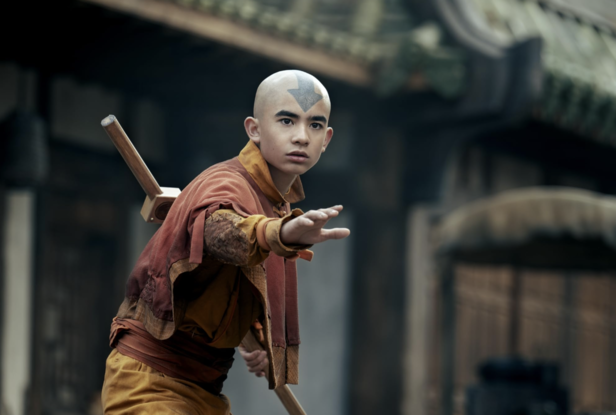
Image credit : Netflix |Gordon Cormier as Aang in Avatar: The Last Airbender
Ba Sing Se’s conquest marks a major Fire Nation victory, with Iroh imprisoned and the Earth King sidelined. Zuko’s alignment with Azula delays his redemption but sets up future turmoil. For Team Avatar, the defeat necessitates regrouping, likely emphasising Aang’s recovery, firebending training, and renewed alliances.
The confirmed Season 3 renewal reassures survival, but consequences- physical trauma, psychological impact or temporary power limitations, will shape future episodes.
Production insights reveal the finale’s ambition. Longer episodes allowed expansive action without sacrificing character moments. The adaptation draws from animated Book Two while condensing for momentum, incorporating elements like metalbending and Ba Sing Se intrigue faithfully yet with live-action texture.
This ending satisfies curiosity while opening doors for viewers. It reflects the season’s strength- developments feel consequential because they stem from character choices, not convenience. Mercy defines Aang, but war tests its limits. Recovery will likely involve spiritual reflection, renewed training, and strategic shifts toward the Fire Nation. Zuko’s path remains turbulent, offering rich potential for conflict and eventual growth. Overall, Season 2 elevates the series by embracing complexity, making the wait for Season 3 both agonising and exciting.
The full season rewards rewatches. Subtle foreshadowing in early visions, training philosophy and interpersonal tensions pays off in the finale. It balances spectacle with quiet observation- exactly what makes Avatar enduring.
Avatar: The Last Airbender Season 2 is available to stream on Netflix.Where to watch Avatar: The Last Airbender Season 2

Did Hardik Pandya get married? New photo with Mahieka Sharma raises questions
By Karen Noronha

Aoashi Season 2 is the comeback football anime fans manifested
By Nillohit Bagchi

The Bear Season 5: Every key moment, recapped
By Sinthya Banik

Can emotional connections still beat modern dating apps?
By Nancy Jaiswal

Can Gen Z still find lasting love? Reddit weighs in
By Nancy Jaiswal

How fast does your body change after you give up sugar?
By Nancy Jaiswal

Why young workers today feel the pressure to become CEOs by 30
By Nancy Jaiswal


