

Notes from the Last Row review: Choi Min sik delivers a gripping psychological thriller that blurs reality and fiction until the final twist
Nillohit Bagchi | Jun 26, 2026, 23:34 IST
Notes from the Last Row is a gripping psychological thriller that explores obsession, storytelling, and the blurred line between fiction and reality. Powered by an outstanding performance from Choi Min sik, the series keeps viewers guessing until its chilling finale, even if its final episode explains a little too much.

Image credit : Netflix | Notes from the Last Row is a gripping psychological thriller that explores obsession, storytelling, and the blurred line between fiction and reality
Netflix continues to expand its catalogue of Korean thrillers, but Notes from the Last Row stands apart by making storytelling itself the central mystery. Instead of relying on constant action or shocking violence, the six episode drama slowly builds tension through words, imagination and obsession.
![]()
Led by a remarkable Choi Min sik, the series asks viewers to question everything they see as reality and fiction gradually become impossible to separate. It is an intelligent psychological thriller that rewards patience, even if its final chapter struggles to maintain the same level of mystery.
Note: Spoilers ahead
At first glance, Notes from the Last Row feels like a familiar teacher and student drama. Professor Heo Mun oh is a respected literature lecturer whose own dreams of becoming a successful novelist disappeared decades ago after his debut book received harsh criticism. Now bitter and emotionally exhausted, he treats writing as nothing more than another university subject.
![Netflix | At first glance, Notes from the Last Row feels like a familiar teacher-student drama]() Everything changes when he reads an essay submitted by one of his quietest students, Lee Kang. Unlike the work of his classmates, Lee Kang's writing is rich with detail and emotion. Every sentence pulls Mun oh deeper into a story that feels strangely alive. Convinced that he has discovered extraordinary talent, the professor insists on mentoring the young writer, even offering him money so he can spend less time working part time jobs and more time writing. What begins as an academic relationship slowly transforms into something much darker.
Everything changes when he reads an essay submitted by one of his quietest students, Lee Kang. Unlike the work of his classmates, Lee Kang's writing is rich with detail and emotion. Every sentence pulls Mun oh deeper into a story that feels strangely alive. Convinced that he has discovered extraordinary talent, the professor insists on mentoring the young writer, even offering him money so he can spend less time working part time jobs and more time writing. What begins as an academic relationship slowly transforms into something much darker.
One of the biggest reasons Notes from the Last Row works so well is Choi Min sik's extraordinary performance. Rather than portraying Mun oh as either a hero or a villain, he creates someone painfully human. The professor is arrogant, insecure, jealous and desperate for validation all at the same time. His failures have left emotional scars that never truly healed, making him vulnerable to the excitement Lee Kang's stories awaken inside him.
As the series progresses, viewers slowly watch his confidence disappear. Every new chapter Lee Kang submits becomes another step towards obsession, and Choi captures that psychological decline with remarkable control. His performance never feels exaggerated, making Mun oh's breakdown even more unsettling because it feels believable. It is one of the actor's strongest television performances in recent years.
The greatest strength of Notes from the Last Row is how it constantly challenges the audience's understanding of what is real. Lee Kang writes about events unfolding inside the wealthy family of one of his classmates. As Mun oh reads each chapter, viewers begin experiencing these moments almost as though they are happening in real life. Gradually, however, small inconsistencies begin appearing, forcing both the professor and the audience to question how much of the story should actually be believed.
This uncertainty becomes the driving force behind the entire drama. Instead of offering simple answers, the series asks viewers to think about the nature of storytelling itself. Every writer borrows from real life, but where exactly does inspiration end and fiction begin? Notes from the Last Row repeatedly explores that question without offering easy conclusions. The result is a thriller that feels far more psychological than conventional.
Although marketed as a mystery thriller, Notes from the Last Row is ultimately a story about obsession. Mun oh quickly stops behaving like a mentor. Instead, he becomes addicted to Lee Kang's writing, impatiently waiting for every new chapter. His curiosity slowly replaces reason, pushing him into situations he would once have considered irresponsible.
![Netflix | Although marketed as a mystery thriller, Notes from the Last Row is ultimately a story about obsession.]() The more invested he becomes, the more he begins projecting his own dreams, regrets and frustrations onto his student. Rather than seeing Lee Kang as an individual, Mun oh starts treating him as the successful writer he wishes he had become himself. That emotional dependency quietly shifts the balance of power between professor and student.
The more invested he becomes, the more he begins projecting his own dreams, regrets and frustrations onto his student. Rather than seeing Lee Kang as an individual, Mun oh starts treating him as the successful writer he wishes he had become himself. That emotional dependency quietly shifts the balance of power between professor and student.
Lee Kang rarely raises his voice or demands attention, yet his silence becomes increasingly powerful. Without saying much, he gradually gains complete control over Mun oh simply through the stories he chooses to tell. This reversal is handled with impressive subtlety and becomes one of the series' most fascinating ideas.
While Mun oh remains the emotional centre of the story, the supporting cast helps expand the drama's larger themes. His wife Jo Hyeon suk carries years of emotional neglect while trying to hold together a marriage that has long since stopped functioning. Her quiet disappointment contrasts sharply with Mun oh's growing obsession, reminding viewers that real life continues outside the stories consuming him.
Meanwhile, successful novelist Kim Su hun represents everything Mun oh believes should have been his own life. Their unresolved history fuels feelings of jealousy that continue influencing Mun oh's decisions long after their youthful ambitions have faded. Even Lee Kang's interactions with the wealthy family featured in his writing introduce new forms of secrecy, manipulation and emotional isolation, ensuring that nearly every character becomes trapped by their own desires rather than simple circumstance.
One of the smartest aspects of Notes from the Last Row is that the mystery is never really the destination. Instead, the series uses suspense to explore why people become so invested in stories and how easily fiction can shape reality.
Mun oh begins reading Lee Kang's assignments like a devoted fan waiting for the next chapter of a novel. Every revelation leaves him desperate for more, and he gradually abandons the objectivity expected of a professor. The excitement of discovering the truth becomes more important than questioning whether that truth actually exists.
This idea makes the drama feel surprisingly relevant. In an era where people constantly debate what is real online, Notes from the Last Row reminds viewers that perspective can be just as powerful as fact. Everyone tells stories through their own experiences, meaning every narrator carries some degree of bias. The series never lectures its audience about this. Instead, it quietly invites viewers to examine their own assumptions, making the experience feel more interactive than many traditional thrillers.
Playing opposite an actor like Choi Min sik could easily result in being overshadowed, but Choi Hyun wook delivers a performance built almost entirely on restraint. Lee Kang is never written as an openly charismatic figure. He speaks little, keeps his emotions guarded and often appears almost detached from the chaos surrounding him. That quiet confidence becomes increasingly unsettling as the story unfolds.
Rather than revealing everything through dialogue, Choi Hyun wook lets small expressions and subtle changes in body language do most of the work. Every smile, pause and glance carries meaning, encouraging viewers to constantly question what his character is really thinking. His chemistry with Choi Min sik becomes one of the drama's strongest assets because it relies on psychological tension rather than emotional confrontation.
Notes from the Last Row is not designed for viewers looking for constant action or rapid plot twists. The drama moves carefully, spending time developing its characters before revealing major narrative turns. Every episode adds another layer to the mystery while slowly increasing the emotional pressure surrounding Mun oh.
Some audiences may find this deliberate pacing frustrating during the opening episodes. However, that slower rhythm allows the psychological elements to grow naturally instead of relying on cheap surprises.
By the middle of the series, the tension becomes almost unbearable because the audience has been given enough information to form theories without ever feeling certain about any of them. That careful balance keeps the suspense alive until the closing episodes.
Despite its many strengths, Notes from the Last Row is not without flaws. The biggest issue arrives in the final episode, where the series suddenly shifts from subtle psychological storytelling to lengthy explanations. After spending five episodes encouraging viewers to question every perspective, the finale attempts to tie together nearly every loose end through extended exposition.
Some answers are certainly satisfying, particularly those surrounding Mun oh's emotional journey. His character arc reaches a fitting conclusion that reflects the consequences of allowing obsession to replace reason. However, the explanations surrounding Lee Kang's motivations feel far less convincing. Instead of allowing audiences to continue interpreting his actions, the series provides information that arguably weakens some of the mystery built throughout the earlier episodes. A little more ambiguity would have made the ending even more powerful.
Another small weakness lies in the treatment of several supporting characters. Jo Hyeon suk begins the series as one of its most emotionally compelling figures. Her loneliness and frustration provide an important counterpoint to Mun oh's growing obsession, yet her storyline gradually fades into the background as the mystery takes centre stage.
Similarly, other characters sometimes feel more like pieces of the larger puzzle than fully developed individuals. Their personal journeys often exist primarily to move the central narrative forward rather than reaching satisfying conclusions of their own. Fortunately, the performances remain strong enough to ensure these characters still leave an impression despite their limited development.
Notes from the Last Row is one of Netflix's most thought provoking Korean thrillers in recent memory. Rather than relying on shocking violence or endless plot twists, it builds suspense through psychology, unreliable narration and the dangerous relationship between fiction and reality. Every episode challenges viewers to question not only what they are watching but also why they are so willing to believe it.
Choi Min sik delivers another exceptional performance, portraying a man whose hunger for artistic validation slowly destroys his sense of judgement. Choi Hyun wook complements him perfectly with a restrained performance that becomes more fascinating with every episode.
While the final chapter leans too heavily on exposition and some supporting characters deserve stronger conclusions, these shortcomings are not enough to overshadow the series' many strengths. Intelligent, unsettling and emotionally layered, Notes from the Last Row is a rewarding slow burn that lingers long after the credits roll.

Led by a remarkable Choi Min sik, the series asks viewers to question everything they see as reality and fiction gradually become impossible to separate. It is an intelligent psychological thriller that rewards patience, even if its final chapter struggles to maintain the same level of mystery.
Note: Spoilers ahead
A simple classroom assignment becomes something far more dangerous
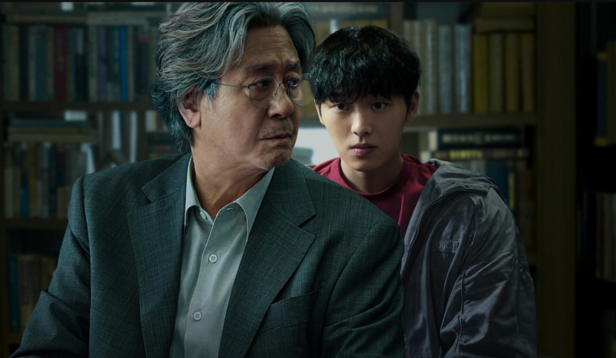
Image credit : Netflix | At first glance, Notes from the Last Row feels like a familiar teacher-student drama
Choi Min sik delivers another unforgettable performance
As the series progresses, viewers slowly watch his confidence disappear. Every new chapter Lee Kang submits becomes another step towards obsession, and Choi captures that psychological decline with remarkable control. His performance never feels exaggerated, making Mun oh's breakdown even more unsettling because it feels believable. It is one of the actor's strongest television performances in recent years.
The series cleverly plays with reality and imagination
This uncertainty becomes the driving force behind the entire drama. Instead of offering simple answers, the series asks viewers to think about the nature of storytelling itself. Every writer borrows from real life, but where exactly does inspiration end and fiction begin? Notes from the Last Row repeatedly explores that question without offering easy conclusions. The result is a thriller that feels far more psychological than conventional.
Obsession becomes the real villain

Image credit : Netflix | Although marketed as a mystery thriller, Notes from the Last Row is ultimately a story about obsession.
Lee Kang rarely raises his voice or demands attention, yet his silence becomes increasingly powerful. Without saying much, he gradually gains complete control over Mun oh simply through the stories he chooses to tell. This reversal is handled with impressive subtlety and becomes one of the series' most fascinating ideas.
Every supporting character reflects another form of desire
Meanwhile, successful novelist Kim Su hun represents everything Mun oh believes should have been his own life. Their unresolved history fuels feelings of jealousy that continue influencing Mun oh's decisions long after their youthful ambitions have faded. Even Lee Kang's interactions with the wealthy family featured in his writing introduce new forms of secrecy, manipulation and emotional isolation, ensuring that nearly every character becomes trapped by their own desires rather than simple circumstance.
thread with spoilers of “notes from the last row” and my thoughts as I watch: pic.twitter.com/gHNWV5zMUB
— misha (@hvnsil) June 26, 2026
Notes from the Last Row is less interested in solving mysteries than examining storytelling itself
Mun oh begins reading Lee Kang's assignments like a devoted fan waiting for the next chapter of a novel. Every revelation leaves him desperate for more, and he gradually abandons the objectivity expected of a professor. The excitement of discovering the truth becomes more important than questioning whether that truth actually exists.
This idea makes the drama feel surprisingly relevant. In an era where people constantly debate what is real online, Notes from the Last Row reminds viewers that perspective can be just as powerful as fact. Everyone tells stories through their own experiences, meaning every narrator carries some degree of bias. The series never lectures its audience about this. Instead, it quietly invites viewers to examine their own assumptions, making the experience feel more interactive than many traditional thrillers.
⚠️NOTES FROM THE LAST ROW SPOILER⚠️
— ra (@orbtingyou) June 26, 2026
OH MY FUCKING GOD WHAAAATTTT HYUNWOOK KISS AND BED SCENE?????????????
Choi Hyun wook proves that less can often be more
Rather than revealing everything through dialogue, Choi Hyun wook lets small expressions and subtle changes in body language do most of the work. Every smile, pause and glance carries meaning, encouraging viewers to constantly question what his character is really thinking. His chemistry with Choi Min sik becomes one of the drama's strongest assets because it relies on psychological tension rather than emotional confrontation.
The pacing demands patience but rewards attentive viewers
Some audiences may find this deliberate pacing frustrating during the opening episodes. However, that slower rhythm allows the psychological elements to grow naturally instead of relying on cheap surprises.
⚠️SPOILER⚠️
— june! ֶָ֢𐚁๋࣭⭑ֶָ֢ (@dohyunize) June 26, 2026
choi hyunwook YOU ARE CRAZY.....#NotesFromTheLastRow#NotesFromTheLastRowEp6 pic.twitter.com/NgsCQXO7OD
The ending explains too much after spending so long embracing uncertainty
Some answers are certainly satisfying, particularly those surrounding Mun oh's emotional journey. His character arc reaches a fitting conclusion that reflects the consequences of allowing obsession to replace reason. However, the explanations surrounding Lee Kang's motivations feel far less convincing. Instead of allowing audiences to continue interpreting his actions, the series provides information that arguably weakens some of the mystery built throughout the earlier episodes. A little more ambiguity would have made the ending even more powerful.
The supporting cast deserves more attention than the story gives them
#NotesFromTheLastRow SPOILERS
— wes 🐰 (@jihooncoded) June 26, 2026
bro. what the fuck even is this show pic.twitter.com/VpkSxpjzhr
Verdict
Choi Min sik delivers another exceptional performance, portraying a man whose hunger for artistic validation slowly destroys his sense of judgement. Choi Hyun wook complements him perfectly with a restrained performance that becomes more fascinating with every episode.
While the final chapter leans too heavily on exposition and some supporting characters deserve stronger conclusions, these shortcomings are not enough to overshadow the series' many strengths. Intelligent, unsettling and emotionally layered, Notes from the Last Row is a rewarding slow burn that lingers long after the credits roll.

The ultimate stream-or-skip guide for this week's OTT drops
By Nillohit Bagchi

South Korea's World Cup setback proves the internet still blames women first
By Shivani Negi

‘Look out for my invitation for Sunday’: Why is Drake throwing a party for all Janices? Rapper’s new stunt explained
By Tanima Mukherjee

Ecuador's 'Spider-Man' coach Sebastián Beccacece is FIFA World Cup 2026's new hero
By Nillohit Bagchi

The Virat Kohli x IShowSpeed agenda is taking over the internet
By Supratik

11 East Asian films that hit you right in the feels
By

Why fans are defending Choi Woo-shik after AMI Paris 'racism' video?
By Karen Noronha


